
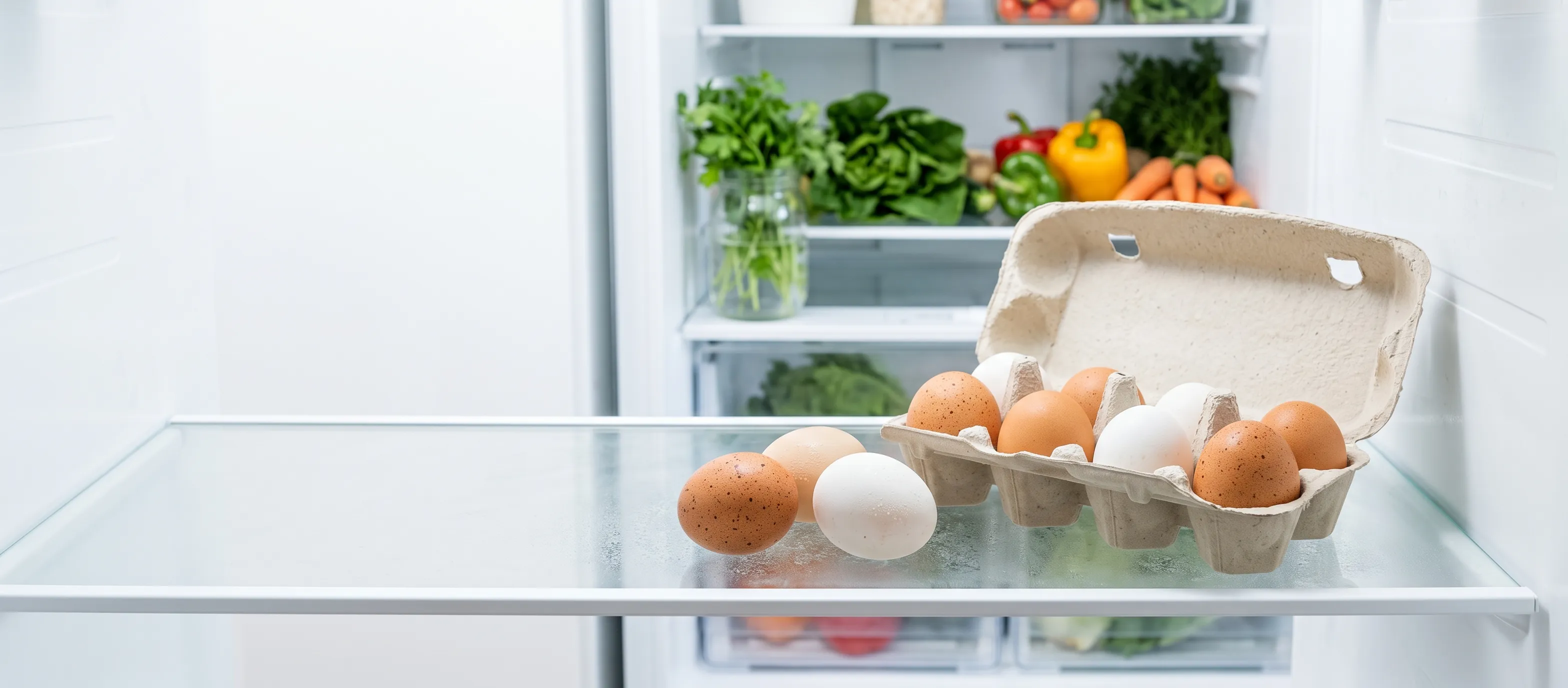
Proper storage is important for maintaining the quality and freshness of eggs. Even high-quality eggs need to be handled and stored correctly after purchase.
Following a few simple storage practices can help keep your eggs in good condition for longer.
Keep Eggs Refrigerated
After purchasing eggs, keep them refrigerated according to the storage instructions provided on the packaging. A consistent, cool temperature helps maintain their quality.
Avoid leaving eggs at room temperature for extended periods, particularly in warm weather.
Keep Eggs in Their Original Packaging
Storing eggs in their original carton or packaging helps protect them from damage and contamination. It can also make it easier to check product information and dates.
Avoid transferring eggs unnecessarily between different containers.
Store Eggs Away From Strong-Smelling Foods
Eggshells are porous and can absorb strong odors from their surroundings. Keeping eggs away from strongly scented foods can help maintain their natural taste and smell.
Handle Eggs Carefully
Eggs can break easily, so handle them carefully when storing or removing them from the refrigerator. Place them in a stable position where they are less likely to be knocked or damaged.
Wash Your Hands After Handling Raw Eggs
Always wash your hands with soap and water after handling raw eggs. Clean utensils, countertops, and other surfaces that come into contact with raw eggs as well.
Check Eggs Before Use
Before preparing an egg, check its shell for cracks, unusual appearance, or other signs that it may not be suitable for use. When in doubt, it is safer not to consume it.
Follow the Storage Instructions
Storage recommendations can vary depending on the product and local conditions. Always follow the instructions provided on the packaging and use eggs within the recommended period.
At ARFarms, we focus on careful handling and quality throughout the process, helping you receive fresh products that are ready for your kitchen.